Short Version
Vegetable cellulose is the capsule shell and makes the product vegetarian. Rice flour is a bulking agent that fills the space a small blend cannot. Magnesium stearate is a lubricant present at well under one per cent, and the internet panic about it does not survive contact with the evidence.
Vegetable Cellulose
This is the capsule itself, usually hypromellose — a modified cellulose derived from plant fibre. It is the vegetarian alternative to gelatin, which comes from animal collagen.
Practically, it means three things. The product is vegetarian and usually vegan. It is halal and kosher without needing separate certification for the shell. And it is slightly more stable in heat and humidity than gelatin, which matters for a bottle that might sit in a delivery van in July.
Cellulose capsules dissolve a little more slowly than gelatin ones in some conditions, which is a difference of minutes rather than anything meaningful.
Rice Flour
A bulking agent, and the reason it is there is a small piece of manufacturing arithmetic worth understanding.
A standard size 0 capsule holds roughly 400 to 500 mg of a typical powder. If the active blend weighs less than the capsule can hold, something has to fill the rest, or the powder rattles around and the capsules fill inconsistently on the machine.
So rice flour is not padding in a dishonest sense. It is the answer to a real physical problem. It is also gluten free, which is one of the reasons it is preferred over wheat-based alternatives, and it is the reason a gluten free badge can appear on a bottle like this.
Where a filler is worth noticing: if a capsule declares a small blend and the ingredient list is mostly filler, you are buying a lot of rice flour. Comparing blend weight against capsule size is a reasonable sanity check, and the arithmetic article covers the related question.
Magnesium Stearate
This is the one that generates the noise, so it gets the most space.
Magnesium stearate is a magnesium salt of stearic acid, a saturated fat found in beef, cocoa butter and coconut oil. In manufacturing it is a flow agent: it stops powder sticking to the machinery, which is what allows consistent capsule filling at speed.
It is typically present at 0.25 to 1 per cent of a capsule’s weight. In a 500 mg blend that is somewhere between one and five milligrams.
The three claims made against it
"It suppresses the immune system." This traces to a single 1990 study on isolated mouse T-cells in a dish. Applying a compound directly to cells in culture is not the same as eating a milligram of it, and no human evidence supports the claim.
"It forms a biofilm that blocks absorption." There is some evidence that magnesium stearate can slow dissolution slightly in laboratory testing. Whether that changes absorption meaningfully in a person is not established, and the amounts involved are tiny.
"It is a dangerous chemical." Stearic acid is a fat you eat every day. Magnesium is a mineral you need. The compound is on the FDA generally recognised as safe list and appears in an enormous share of tablets and capsules worldwide.
The honest summary. If you want to avoid magnesium stearate, products without it exist and there is no harm in preferring them. But it is not the reason a supplement does or does not work, and worrying about a milligram of it while ignoring what the actives are actually dosed at is worrying about the wrong thing entirely.
When Fillers Genuinely Matter
- Allergies. Rice is a rare allergen but not an impossible one. Some products use wheat starch or soy-derived agents instead, which matter more.
- Coeliac disease. Rice flour is naturally gluten free, which is why it appears here. A wheat-based filler would not be.
- Vegetarian and vegan diets. The capsule shell is the deciding line, and cellulose versus gelatin is the whole question.
- Very large daily capsule counts. If you take fifteen capsules a day across several products, the fillers add up to something. At one a day they do not.
What To Read Instead
The other ingredients line takes ten seconds and is worth reading once, for allergies and for the vegetarian question. Then move on.
The line above it — the one with the blend weight on it — is where the actual information is. Berberine and Banaba Leaf are the two names on this particular label whose amounts genuinely decide whether the product does anything, and neither of them is a filler.
Questions On This Article
What readers ask after reading it.
Is magnesium stearate safe?
It is a magnesium salt of a common dietary fat, present at under one per cent of a capsule, and it is on the FDA generally recognised as safe list. The immune suppression claim traces to one 1990 study on mouse cells in a dish.
Why is there rice flour in my supplement?
As a bulking agent. A capsule holds a fixed volume, and if the active blend weighs less than that, something has to fill the rest for consistent filling on the machine.
Are vegetable cellulose capsules better than gelatin?
For vegetarians, vegans, and halal or kosher diets, yes. They are also slightly more stable in heat. For absorption the difference is minutes.
Do fillers reduce how well a supplement works?
There is laboratory evidence that magnesium stearate can slow dissolution slightly. Whether that changes absorption meaningfully in a person is not established.
Should I avoid supplements with fillers?
Filler-free products exist and preferring them does no harm. It is a far smaller question than whether the active ingredients are at meaningful doses.
Three More Articles
Ingredients Named Above
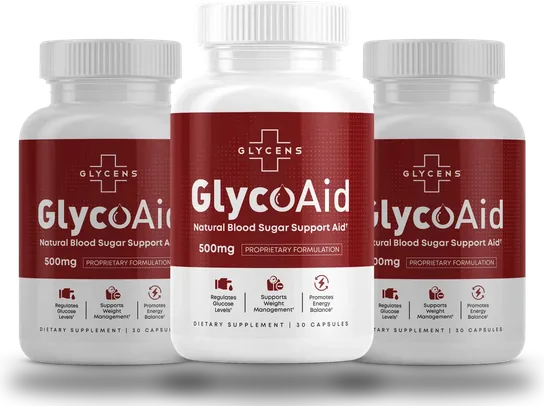
Order Your GlycoAid Today
One capsule with a meal, a page for every name on the label, and sixty days to send it back if it does nothing.
- One capsule a day, taken with food
- Fourteen names, every one with its own page here
- Free US delivery on the 3 and 6 bottle packs
- Sixty days to send it back, opened bottles included