Home›Ingredients›Berberine
Ingredient 1 of 14
Berberine In GlycoAid
The name most people are buying this product for, and the one the blend arithmetic treats most harshly.
Berberine: Source And Background
Berberine is a yellow alkaloid found in the roots and bark of several unrelated plants — goldenseal, barberry, Oregon grape and Chinese goldthread among them. It has been used in Chinese and Ayurvedic medicine for centuries, mostly for digestive complaints rather than for blood sugar.
Supplements use berberine hydrochloride, a salt chosen because it is stable and reasonably well characterised. It is intensely bitter and stains everything it touches yellow, which is why it lives in a capsule rather than a powder.
Its modern reputation is recent. Interest in berberine for metabolic markers grew from the 2000s onward, and it is now the single most-discussed botanical in this category.
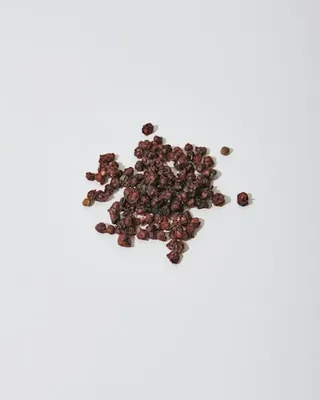
One of fourteen names inside the 500 mg GlycoAid blend
Verdict: Strong on its own at trial doses. Almost certainly under-dosed inside a 500 mg blend.
Its Job In What Is GlycoAid
Berberine is proposed to activate AMPK, an enzyme that acts as a kind of cellular energy sensor. When AMPK is switched on, cells take up more glucose and the liver releases less of it. That is the same broad pathway metformin is understood to work through, which is where the constant comparison comes from.
There is a second mechanism worth knowing: berberine changes the gut microbiome, and some researchers think a meaningful share of its metabolic effect happens there rather than in the liver. That would also explain why its digestive side effects are so common.
Inside this formula it is the heavyweight, alongside Chromium, which has a settled nutritional role, and Cinnamon Bark, which comes at the same problem from an entirely different direction.
How Good Is The Evidence?
Fasting glucose and HbA1c: moderate to strong, at proper doses. Multiple randomised trials and several meta-analyses report meaningful reductions. This is unusual in the supplement world and it is why berberine gets taken seriously.
Cholesterol markers: moderate. Reductions in LDL and triglycerides appear across several trials.
Weight: weak. Small differences, inconsistent, and not what the mechanism predicts.
Two honest caveats. A large share of the trials come from a small number of research groups, and study quality varies. And every single one of those results comes from doses this blend cannot deliver, which is the next section.
Dose, Timing And What Is Printed
The trials use 900 to 1,500 mg a day, almost always split into two or three doses because berberine clears quickly and because a single large dose is hard on the stomach. Five hundred milligrams three times daily is the most common protocol.
The entire GlycoAid blend weighs 500 mg and holds fourteen names. Even if berberine were the whole blend — which it is not, because thirteen other things are in there — it would still be a third of the usual daily dose, taken once rather than three times.
That is not an accusation about this product. It is arithmetic that applies to nearly every multi-ingredient blend containing berberine, and the blend arithmetic article works it through properly.
Who Should Check First
Glucose medication. The main one, and it is serious. Berberine lowers blood glucose through a real mechanism. Stacking it on insulin or a sulfonylurea without supervision is how hypoglycaemia happens.
Drug interactions through CYP enzymes. Berberine inhibits several liver enzymes that clear prescription medicines, and it also affects P-glycoprotein. Cyclosporine levels rise measurably. Anyone on a narrow-therapeutic-index drug needs a pharmacist to look at this.
Pregnancy and infants. Avoid entirely. Berberine crosses the placenta and has been linked to kernicterus in newborns.
Digestive upset. Cramping, diarrhoea and constipation are common at full doses and are the usual reason people stop.
Two Claims This Is Not
Not natural metformin. The phrase is everywhere and it is wrong. Metformin is a prescription medicine with decades of outcome data and a known dose. Berberine is a supplement with promising markers and no outcome trials, and that comparison has its own article.
Not a replacement for anything prescribed. Nobody should stop a medicine because a capsule contains berberine.
This is not medical advice. Any prescription, pregnancy, breastfeeding or diagnosed condition means a word with a doctor or pharmacist before a first capsule. Every interaction worth raising is tabulated on the safety page.
Berberine: What People Ask
What readers want to know about this name in particular.
How much berberine is in GlycoAid?
The label does not say, because all fourteen names share one 500 mg blend weight. What can be said with confidence is that it is well below the 900 to 1,500 mg a day the trials used.
Is berberine as good as metformin?
No. Metformin is a prescription medicine with decades of hard outcome data behind it. Berberine has encouraging marker data and no outcome trials, and the two are not interchangeable.
Why does berberine upset my stomach?
It acts partly on the gut microbiome and it is a strong alkaloid. Cramping and loose stools are the commonest reason people abandon it, and taking it with food helps.
Can I take berberine with my diabetes tablets?
Only with your doctor's knowledge. Both push glucose downward, and additive effects there are the documented risk with this whole category.
The Remaining Thirteen
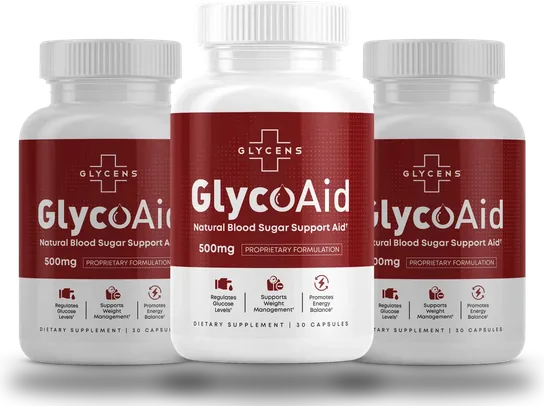
GlycoAid: Fourteen Names, One Capsule A Day
One capsule with a meal, a page for every name on the label, and sixty days to send it back if it does nothing.
- One capsule a day, taken with food
- Fourteen names, every one with its own page here
- Free US delivery on the 3 and 6 bottle packs
- Sixty days to send it back, opened bottles included