Short Version
Cassia cinnamon contains coumarin, which is liver-toxic at sustained high intakes. Ceylon cinnamon contains almost none. European guidance puts the tolerable daily intake at 0.1 mg of coumarin per kilogram of body weight, which for a 70 kg adult is roughly a teaspoon of cassia powder a day. Almost all supermarket and supplement cinnamon is cassia.
Two Different Plants
Cinnamon comes from the bark of trees in the Cinnamomum genus, and several species are sold under the same word.
Cassia — usually Cinnamomum cassia or C. burmannii — is grown in China, Indonesia and Vietnam. It is darker, stronger, cheaper, and it makes up the overwhelming majority of the western market.
Ceylon, Cinnamomum verum, comes mainly from Sri Lanka. It is paler, milder, more complex in flavour, and considerably more expensive. It is sometimes called true cinnamon, which is a marketing name as much as a botanical one.
Both are real cinnamon. They are simply different species with different chemistry, and the label word does not distinguish them.
The Coumarin Problem
Coumarin is a naturally occurring compound with a sweet hay-like smell. It is also hepatotoxic in sustained high intakes, which is why food safety authorities have set a limit.
| Cassia | Ceylon | |
|---|---|---|
| Coumarin content | Roughly 0.4 to 7 g per kg | Trace, often undetectable |
| Colour | Dark reddish brown | Light tan |
| Stick structure | One thick, hard curled layer | Many thin fragile layers like a cigar |
| Flavour | Strong, hot, single note | Mild, sweeter, more complex |
| Price | Cheap | Two to four times more |
The European Food Safety Authority tolerable daily intake is 0.1 mg of coumarin per kilogram of body weight. For a 70 kg adult that is 7 mg a day — which cassia powder can reach in about a teaspoon, depending on the batch.
Where This Does And Does Not Matter
Perspective first, because this is not a reason to be frightened of a spice.
Not a problem: cinnamon on porridge, in a bake, in a coffee. Occasional culinary amounts are well inside the limit for almost everyone.
Worth thinking about: a heaped teaspoon of cassia every single morning for months, which some people do specifically for blood sugar.
Worth checking: a dedicated cinnamon supplement at gram doses. This is where intakes climb without anyone noticing, because the trials that motivated those products used one to six grams a day.
Almost irrelevant: cinnamon inside a small multi-ingredient blend. Whatever cinnamon is in a blend like GlycoAid is a fraction of a 500 mg total shared fourteen ways, and the coumarin exposure from it is negligible. That is the reassuring half of this article.
How To Tell What You Have
- Look at the sticks. This is the reliable test. Ceylon quills are made of many paper-thin layers rolled together and crumble easily. Cassia is one thick hard curl.
- Look at the colour. Ceylon is light tan, cassia is dark reddish brown.
- Look at the price. If it is cheap, it is cassia. There is no cheap Ceylon.
- Read the label for a species name. Cinnamomum verum or Ceylon will be stated, because it is a selling point. Anything saying only "cinnamon" is cassia.
- Ask the seller for a supplement. A brand using Ceylon advertises it. A brand that cannot answer has told you something.
Who should care most. Anyone with existing liver disease, anyone taking a medication with liver cautions, and anyone taking a dedicated cinnamon supplement daily for months. For everyone else, using Ceylon for daily habits and cassia for occasional baking is a sensible and inexpensive rule.
Does Either One Help Blood Sugar?
Honestly, not much, and the answer does not depend on the species.
The human trials are weak and inconsistent for both. Some report small reductions in fasting glucose and others find nothing, and meta-analyses have landed on both sides depending on which studies they include. Cinnamon Bark goes through the evidence in full.
So the practical position is this: if you enjoy cinnamon, use it, preferably Ceylon if you use it daily. Do not take a gram-dose cassia supplement for glucose, because you would be accepting a real coumarin exposure in exchange for a weak and disputed benefit.
Questions On This Article
What readers ask after reading it.
What is the difference between cassia and Ceylon cinnamon?
They are different species. Cassia is darker, cheaper and contains coumarin. Ceylon is paler, milder, more expensive and contains almost no coumarin.
Is cassia cinnamon dangerous?
At culinary amounts, no. Coumarin is liver-toxic at sustained high intakes, and European guidance sets a tolerable daily intake of 0.1 mg per kilogram of body weight.
How can I tell which cinnamon I have?
Look at the sticks. Ceylon is many thin fragile layers rolled together and light tan. Cassia is one thick hard dark curl. Price is the other reliable clue.
Which cinnamon is in supplements?
Usually cassia, because it is cheaper. Brands using Ceylon almost always say so on the label, because it justifies the price.
Does cinnamon help blood sugar?
The human evidence is weak and inconsistent for both species, and meta-analyses have gone both ways depending on which trials they include.
Three More Articles
Ingredients Named Above
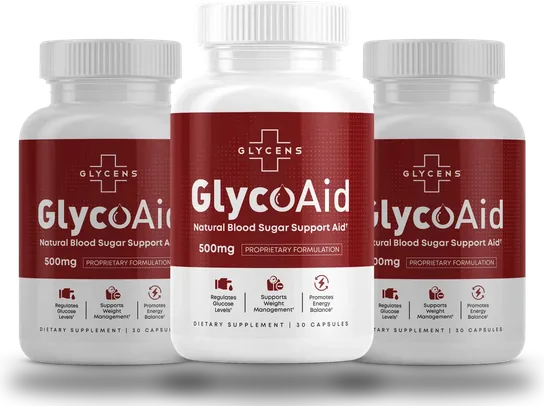
Order Your GlycoAid Today
One capsule with a meal, a page for every name on the label, and sixty days to send it back if it does nothing.
- One capsule a day, taken with food
- Fourteen names, every one with its own page here
- Free US delivery on the 3 and 6 bottle packs
- Sixty days to send it back, opened bottles included