Home›Ingredients›White Mulberry Leaf
Ingredient 9 of 14
White Mulberry Leaf In GlycoAid
One of the most specific mechanisms on this label, attached to one of the smallest piles of human evidence.
White Mulberry Leaf: Source And Background
White mulberry, Morus alba, is the tree whose leaves feed silkworms. It is native to China and has been cultivated for millennia, and the leaves have a long record in traditional Chinese medicine.
The compound that matters is 1-deoxynojirimycin, mercifully shortened to DNJ. It is an iminosugar — a molecule shaped closely enough to a sugar to fool an enzyme.
Extracts are sometimes standardised to a DNJ percentage. Most are not, which is the same problem banaba has.
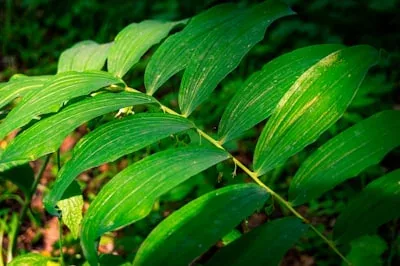
One of fourteen names inside the 500 mg GlycoAid blend
Verdict: Weak to moderate for post-meal glucose. The mechanism is better than the evidence.
Its Job In What Is GlycoAid
DNJ inhibits alpha-glucosidase, the intestinal enzyme that breaks complex carbohydrate down into absorbable glucose. Block it partially and starch is digested more slowly, so the glucose behind a meal enters the bloodstream as a slope rather than a spike.
This is not a vague mechanism. It is the same enzyme target as acarbose, a prescription medicine, which is why the theory is taken seriously even where the evidence is thin.
It overlaps directly with Banaba Leaf, which hits the same enzyme family, and complements Cinnamon Bark, whose main claim sits in insulin signalling rather than digestion.
How Good Is The Evidence?
Post-meal glucose: weak to moderate. Small human trials, mostly Japanese and mostly measuring the glucose response to a starch load, report reductions. The studies are small and short.
Fasting glucose: weak. Less consistent.
HbA1c: not established. Too few trials of sufficient length.
The mechanism-to-evidence ratio here is the highest on the label. That is a polite way of saying the story is more convincing than the data.
Dose, Timing And What Is Printed
Trials have used mulberry leaf extract in the region of 200 mg to 1,000 mg a day, or roughly 6 to 12 mg of DNJ where that was standardised. The lower end of that fits inside a 500 mg blend; the upper end does not.
Timing matters more here than for most of this panel. An alpha-glucosidase inhibitor has to be present when the starch arrives, which means with the meal rather than after it. That is one more reason for the with-food instruction on the routine page.
Who Should Check First
Digestive effects. This is the predictable one. Undigested carbohydrate reaching the large intestine gets fermented by bacteria, which means gas and bloating. Acarbose has the same problem for the same reason.
Glucose medication. Additive effects, and particularly relevant if you already take acarbose or a similar drug, since that would be doubling up on one enzyme target.
Pregnancy and breastfeeding. No safety data. Avoid.
Latex allergy. Mulberry is in the same family as figs and rubber trees, and cross reactivity is theoretically possible.
Two Claims This Is Not
Not a carb blocker in the way that phrase is sold. It slows digestion partially. It does not stop calories being absorbed; it moves them along the timeline.
Not the same as mulberry fruit. The fruit is a berry with some polyphenols. The leaf is where DNJ lives.
This is not medical advice. Any prescription, pregnancy, breastfeeding or diagnosed condition means a word with a doctor or pharmacist before a first capsule. Every interaction worth raising is tabulated on the safety page.
White Mulberry Leaf: What People Ask
What readers want to know about this name in particular.
What does white mulberry leaf do?
Its DNJ content partially inhibits alpha-glucosidase, the gut enzyme that digests starch, which flattens the glucose rise after a starchy meal.
Does it block carbohydrates?
It slows their digestion rather than blocking absorption. The carbohydrate still arrives, more gradually.
Why does it cause bloating?
Carbohydrate that has not been digested reaches the large intestine and gets fermented by bacteria. That is the mechanism working, not a fault.
When should it be taken?
With the meal. An enzyme inhibitor has to be present when the starch arrives, which is one reason this whole formula is a with-food capsule.
The Remaining Thirteen
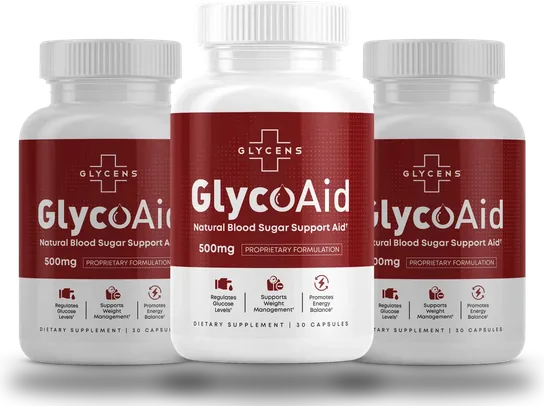
GlycoAid: Fourteen Names, One Capsule A Day
One capsule with a meal, a page for every name on the label, and sixty days to send it back if it does nothing.
- One capsule a day, taken with food
- Fourteen names, every one with its own page here
- Free US delivery on the 3 and 6 bottle packs
- Sixty days to send it back, opened bottles included