Short Version
Add up the research doses of everything in a blend. If that total is bigger than the blend weight, at least some ingredients are below their studied amounts — and the ones listed last are furthest below. This is arithmetic, not opinion, and it works on any label.
What A Proprietary Blend Is Allowed To Hide
US supplement labelling rules require three things of a blend. Every ingredient must be named. They must be listed in descending order by weight. And the total weight of the blend must be accurate.
What is not required is an individual figure for each name. That is the whole gap, and it is entirely legal. The stated justification is trade secrecy — a competitor could copy a formula from exact ratios.
The practical consequence is that a panel can be completely honest and completely uninformative at the same time. Fourteen names, one number, and no way to know from outside the factory how that number is divided.
The Method, In Four Steps
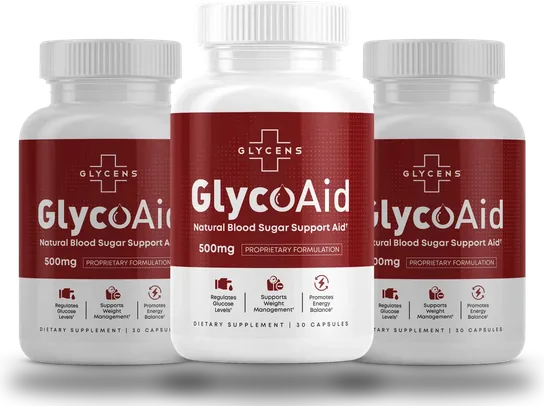
- Write down the blend weight. It is on the panel, immediately after the blend name. For GlycoAid it is 500 mg.
- Look up the research dose for each ingredient. The NIH fact sheets and NCCIH pages carry these for most common names, and every ingredient page on this site states one.
- Compare each dose against the blend total. Any ingredient whose research dose is bigger than the whole blend cannot possibly be at that dose. No arrangement of the other thirteen changes that.
- Read the ordering. Descending by weight is the one piece of dose information you actually get. Whatever is listed first has more in it than whatever is listed last.
Worked Through On This Label
Here is that method applied to the fourteen names in GlycoAid, using the doses the published human trials actually used.
| Ingredient | Trial dose | Can it fit in 500 mg? |
|---|---|---|
| Berberine | 900–1,500 mg daily | No. Needs two to three times the whole blend |
| Alpha-lipoic acid | 600 mg daily | No. More than the whole blend |
| Bitter melon | 2,000–3,000 mg | No. Four to six times over |
| Cinnamon | 1,000–6,000 mg | No. Twice over at best |
| Maca root | 1,500–3,000 mg | No. Three to six times over |
| Turmeric extract | 500–1,500 mg | No. The whole blend at best |
| Gymnema extract | 200–400 mg | Possible, if it took most of the blend |
| White mulberry | 200–1,000 mg | Possible at the low end |
| Goji polysaccharide | 150–300 mg | Possible at the low end |
| Banaba leaf | 32–48 mg standardised | Yes, comfortably — under a tenth of the blend |
| Chromium | 200 micrograms | Yes. 0.04% of the blend by weight |
| Biotin | 30 micrograms adequate intake | Yes. 0.006% by weight |
| Juniper berry | No established human dose | Nothing to compare against |
| Licorice root | No established glucose dose | Safety limit rather than an effective dose |
Add the six "no" rows together. Berberine at 900, ALA at 600, bitter melon at 2,000, cinnamon at 1,000, maca at 1,500 and turmeric at 500 comes to 6,500 mg — thirteen times the blend, using the lowest figure in every range. That is the size of the gap, and no reformulation closes it.
What The Answer Actually Means
Not that the product is a fraud. It means the product is a different thing from what most buyers assume they are getting, and that distinction is worth understanding before you pay.
- Micronutrients are unaffected. Chromium and biotin are measured in micrograms and take up no meaningful room. They can be at any amount the maker chose.
- A few botanicals genuinely fit. Banaba Leaf at 32 to 48 mg is comfortably deliverable, which makes it one of the more interesting names on a label like this.
- The famous ones cannot. Berberine is the name most people are buying for and the one the arithmetic treats most harshly.
- Ordering is your only other clue. Read the list order. It is the one dose signal a blend gives you.
Three Things This Does Not Prove
Fairness requires these.
First, an under-dosed ingredient is not necessarily a useless one. Effects are not all-or-nothing, and a fraction of a dose may produce a fraction of an effect. It just will not produce the trial result.
Second, combinations are not always additive. It is at least possible that several small amounts do something a single ingredient would not. That is a hypothesis rather than a finding, and no blend has demonstrated it.
Third, this problem is close to universal. Nearly every multi-botanical supplement sold has it, and a 500 mg blend of fourteen names is unremarkable in this market. Singling out one product for something the whole category does would be dishonest.
What To Do With The Answer
Buy with the right expectation, or buy something else.
If you want a specific ingredient at a researched dose, buy that ingredient on its own. A standalone product declares its amount, and you can check it against the literature in a minute.
If you want a broad daily botanical with two nutritional amounts you can verify, a blend is a perfectly reasonable thing to buy — provided nobody has told you it is the other thing. That is the whole point of running the arithmetic first.
Questions On This Article
What readers ask after reading it.
Are proprietary blends legal?
Yes. US rules require every ingredient to be named, listed heaviest first, and the blend total to be accurate. They do not require an individual figure for each name.
Why do companies use them?
The stated reason is trade secrecy, so a competitor cannot copy exact ratios. The practical effect is that buyers cannot check doses.
Does the ingredient order really mean anything?
Yes, and it is the one dose signal you get. Ingredients must be listed in descending order by weight, so what appears first has more in it than what appears last.
Is an under-dosed ingredient useless?
Not necessarily. Effects are rarely all-or-nothing, so a fraction of a dose may produce a fraction of an effect. It will not reproduce the trial result.
Do vitamins and minerals have to be declared separately?
Vitamins and minerals carry percent daily values even inside a blend, which is why chromium and biotin are the two checkable figures on this particular label.
Three More Articles
Ingredients Named Above
Order Your GlycoAid Today
One capsule with a meal, a page for every name on the label, and sixty days to send it back if it does nothing.
- One capsule a day, taken with food
- Fourteen names, every one with its own page here
- Free US delivery on the 3 and 6 bottle packs
- Sixty days to send it back, opened bottles included